Notes: Harder end of moderate scrambling, exposure. Kananaskis Conservation Pass Required.
Trip Report
A Kananaskis Conservation Pass is required and can be purchased in advance online. There is no cell coverage until the summit ridge is gained, so be sure to purchase this before leaving Canmore.
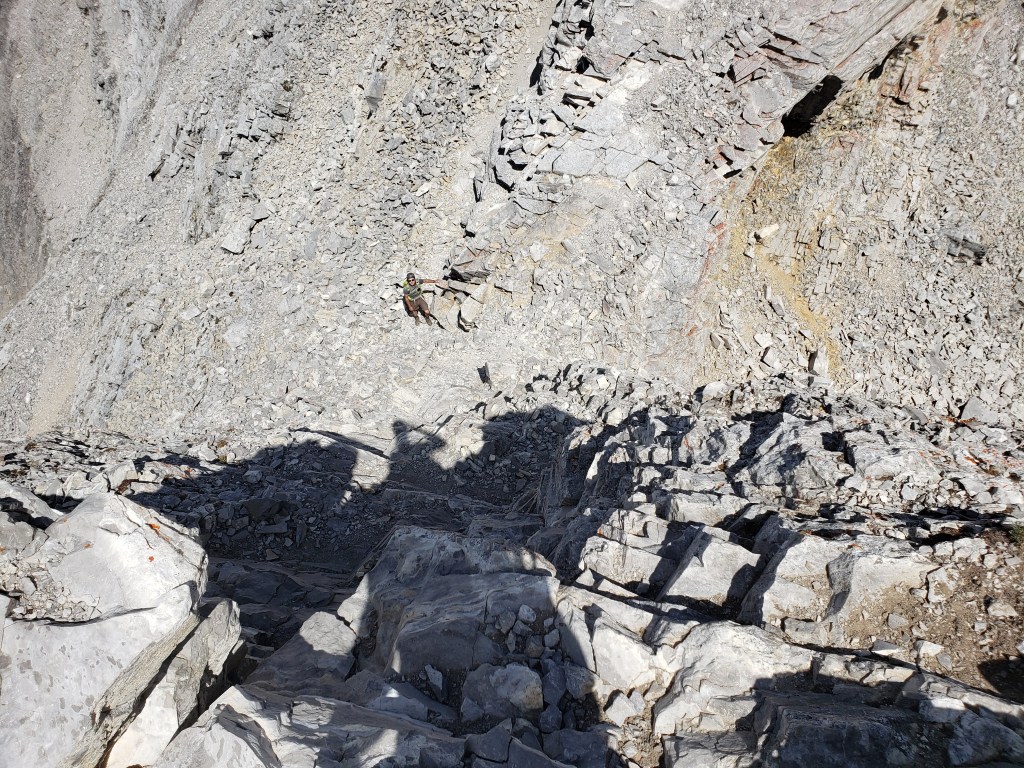
Parks Day is celebrated on the 3rd Saturday of July. We took in the occasion by scrambling the most iconic peak in the Bow Valley: Big Sister! She is the tallest of Canmore’s iconic Three Sisters. Big Sister makes for a fun day out with lots of slab scrambling and even some neat stemming moves through a cruxy downclimb. The downclimb feels very airy and I would put this at the harder end of moderate scrambling. If the reader is looking for an easier option with virtually identical views they might try neighbouring Rimwall Summit.
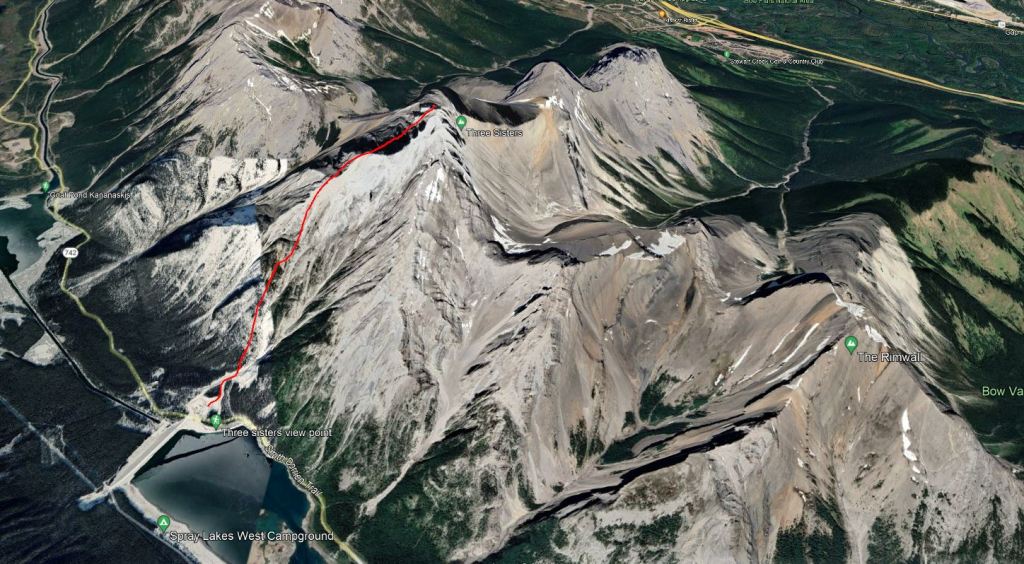
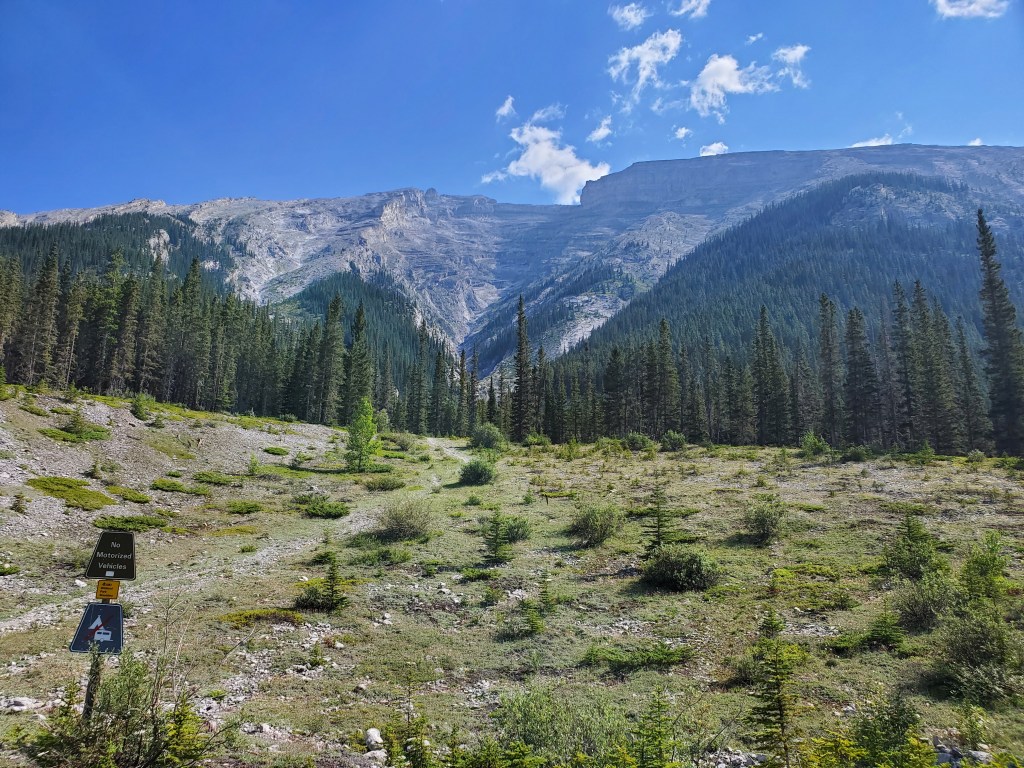
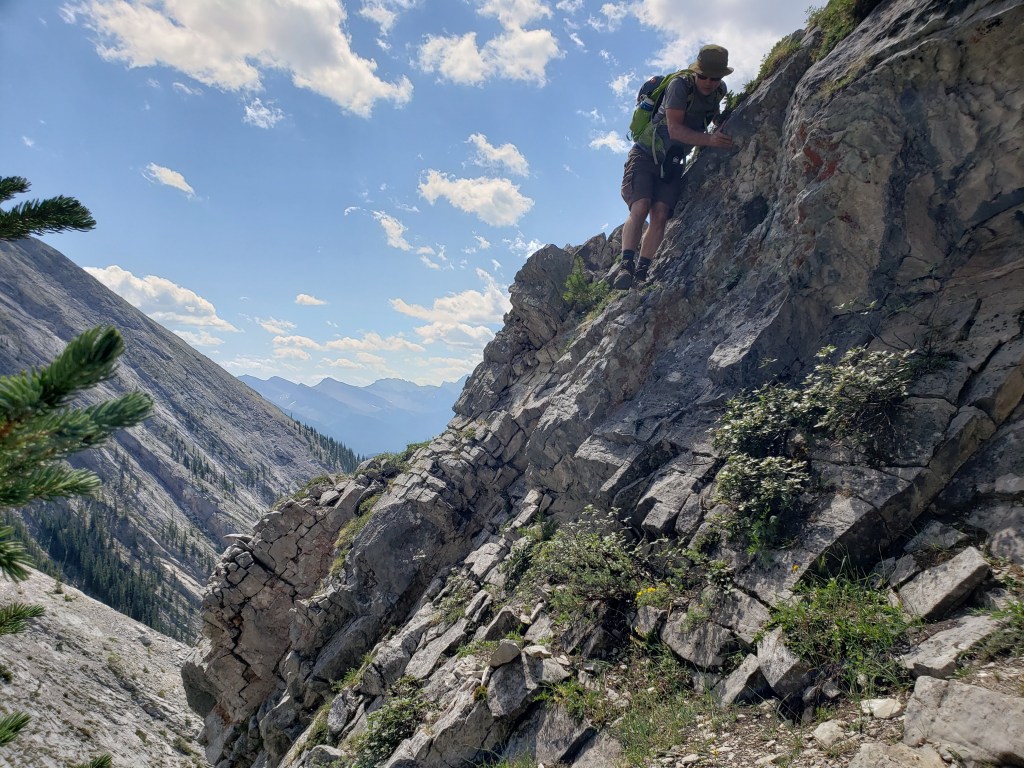
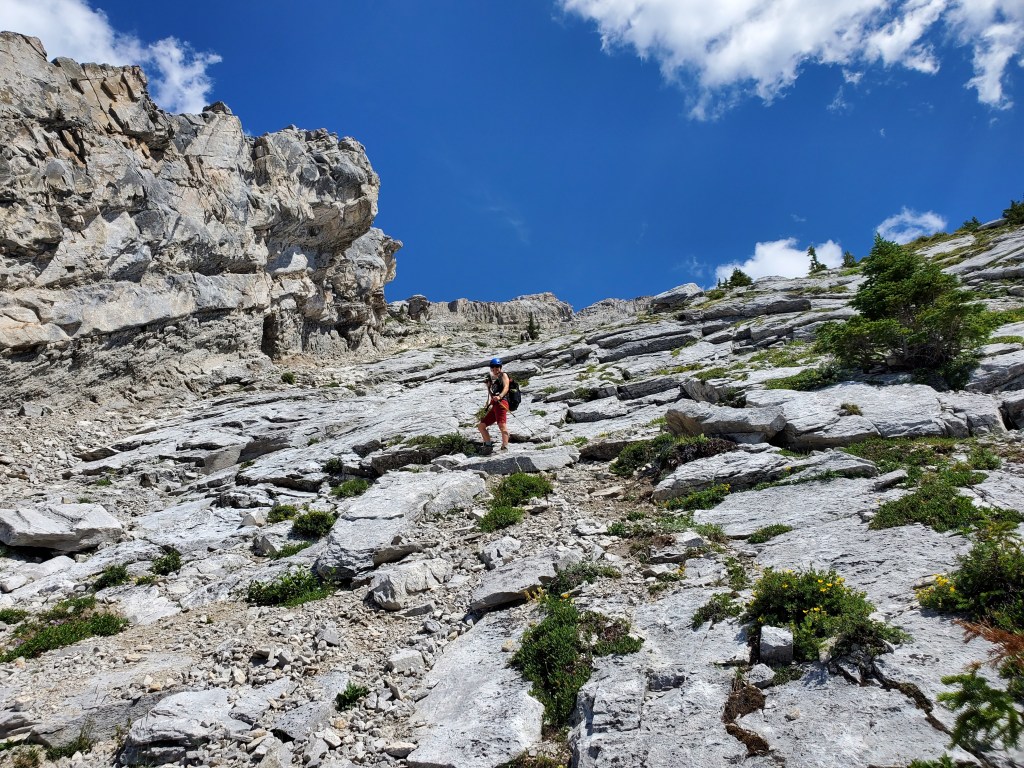
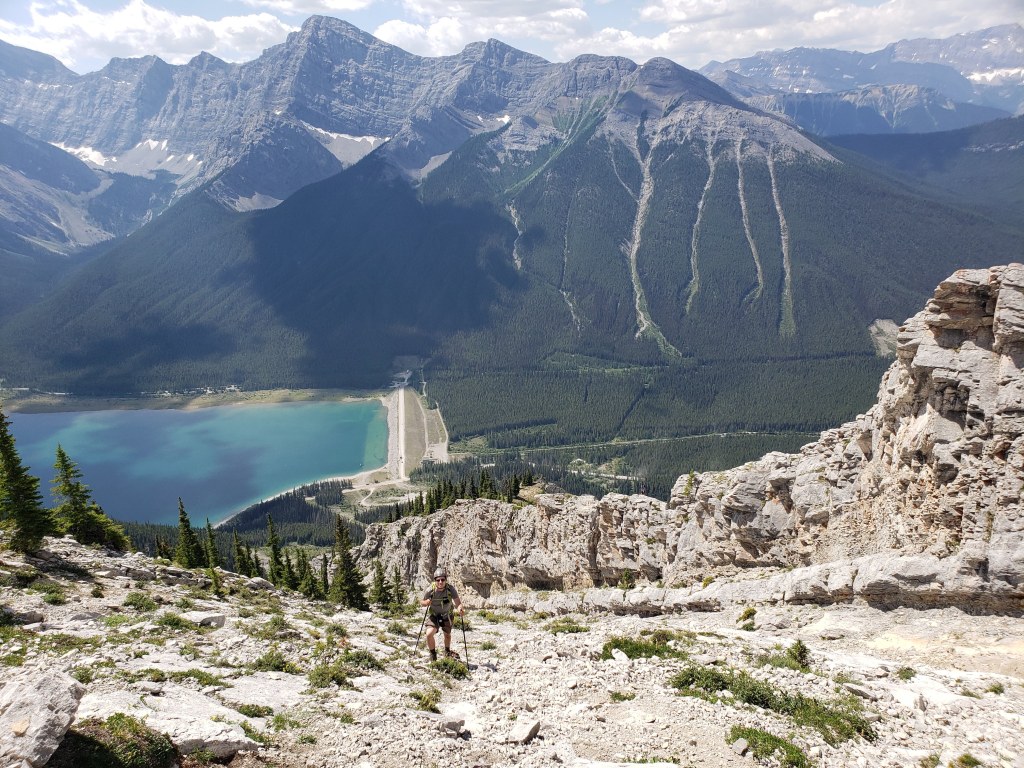
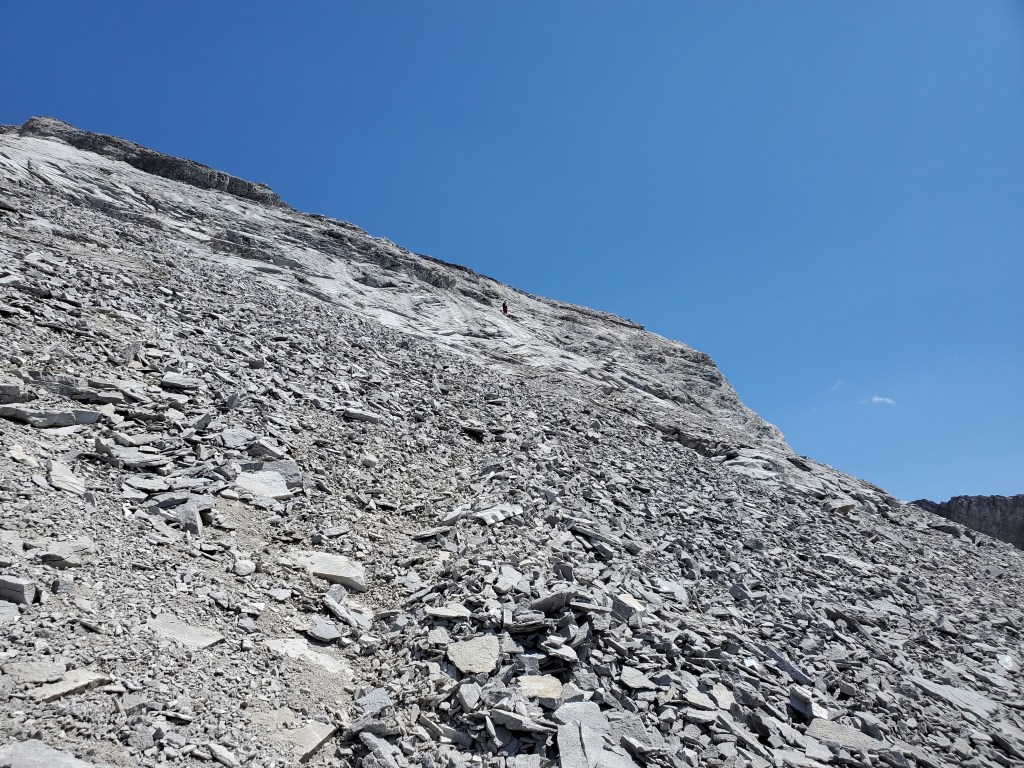
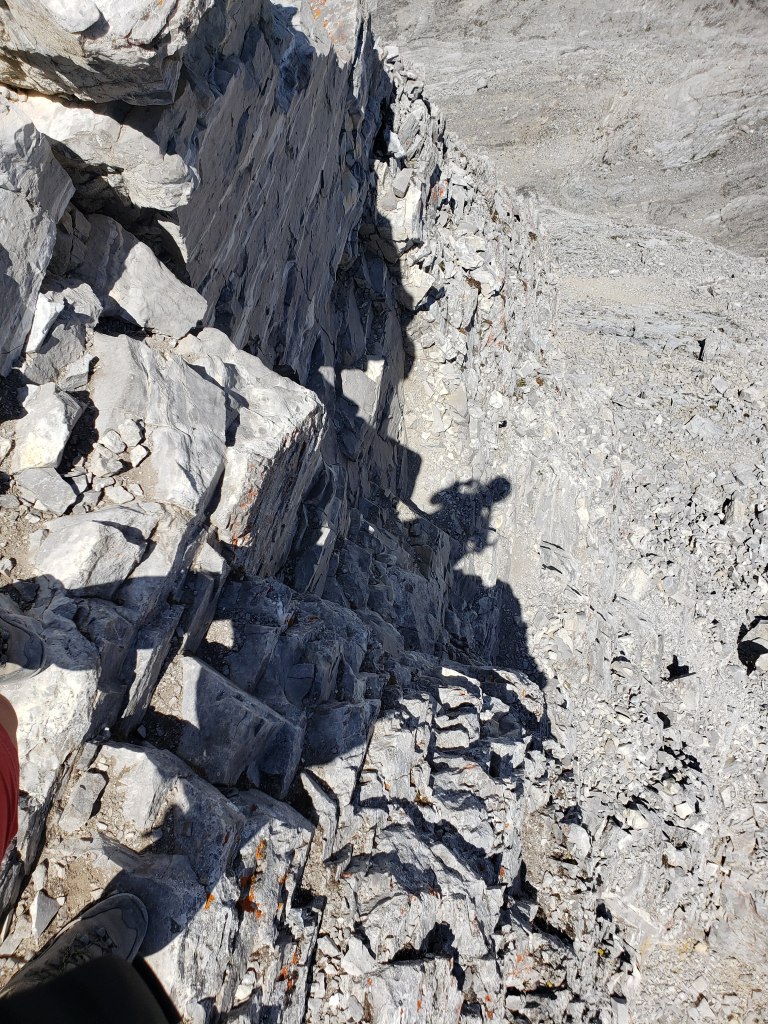
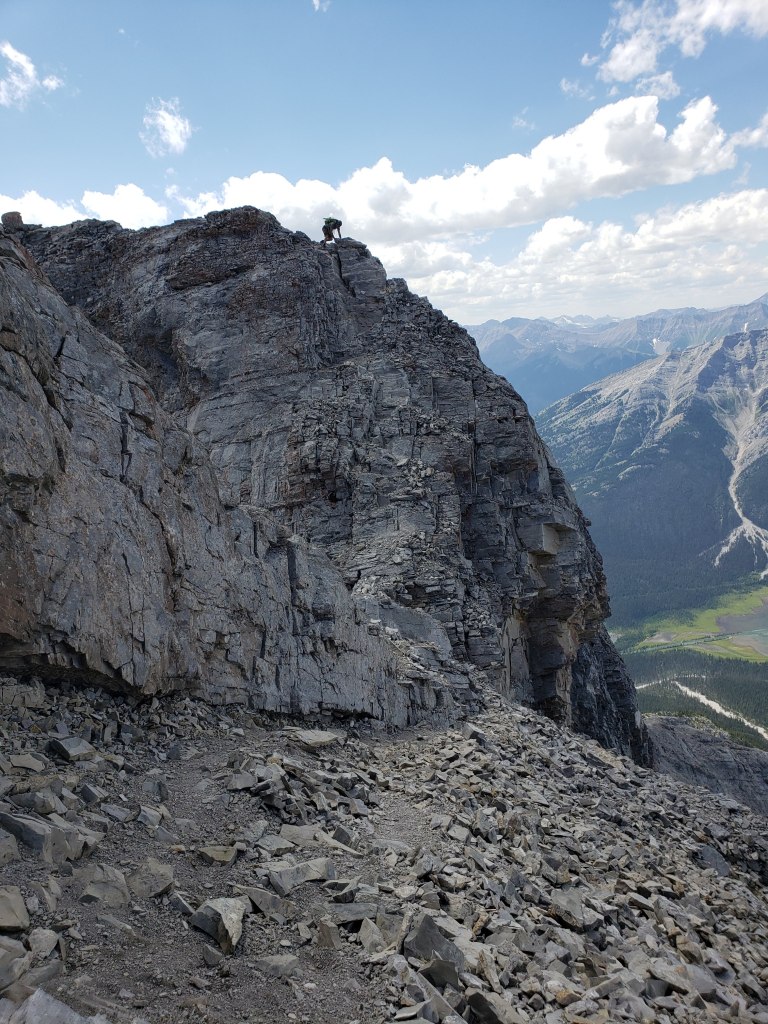
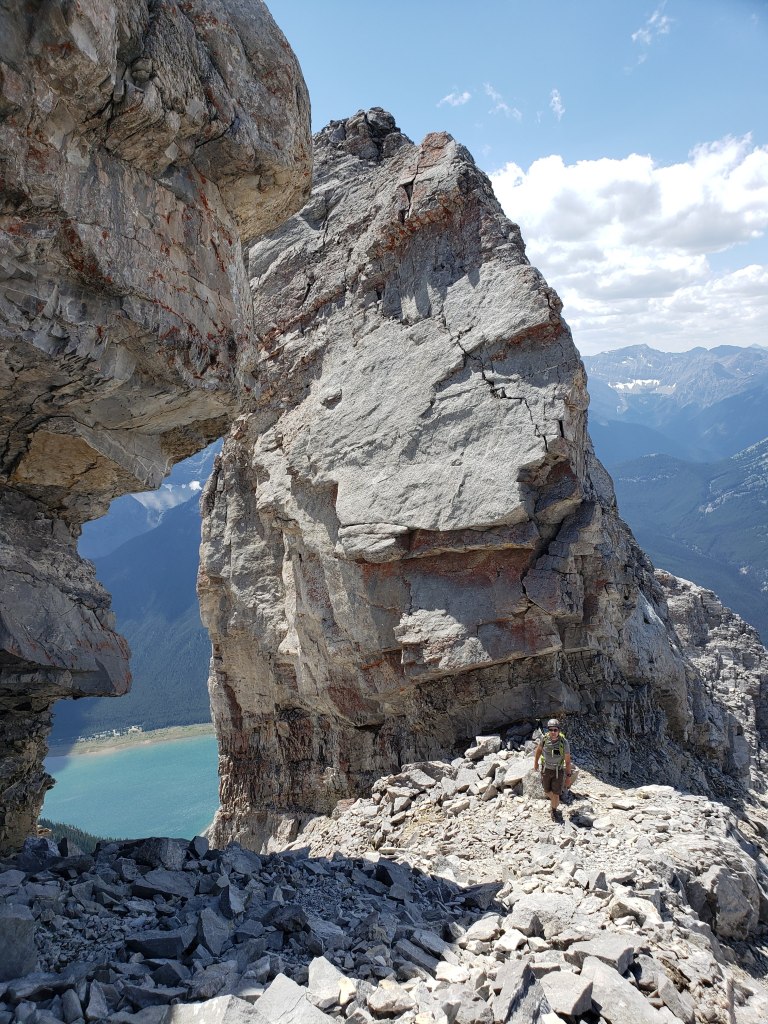
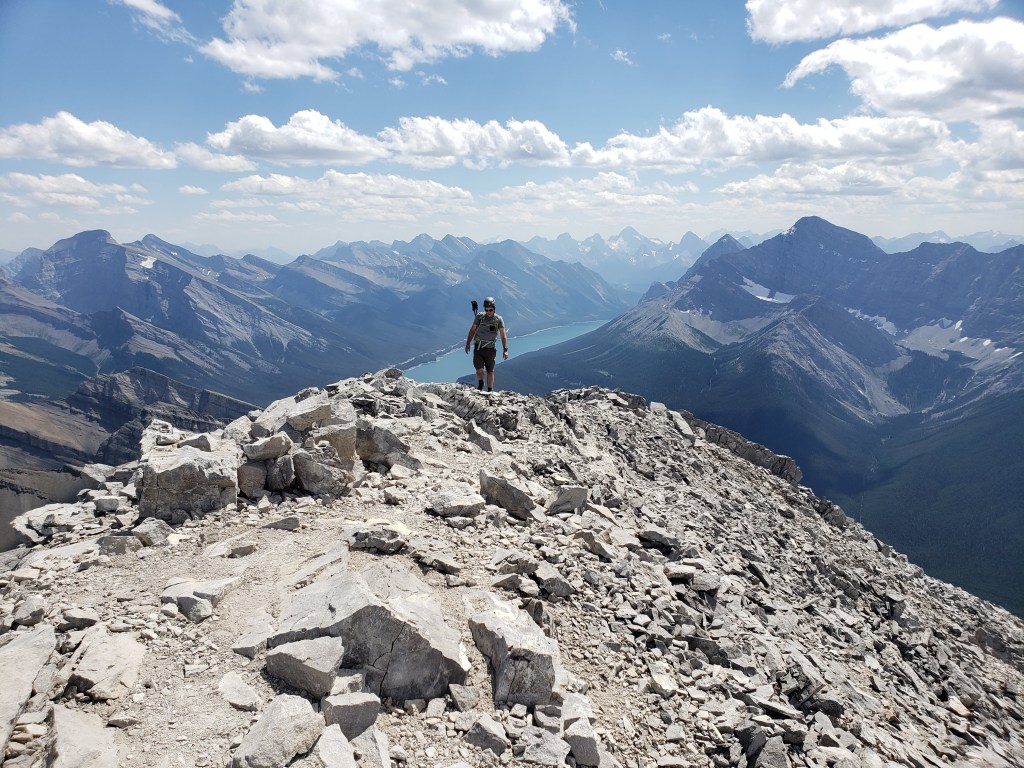
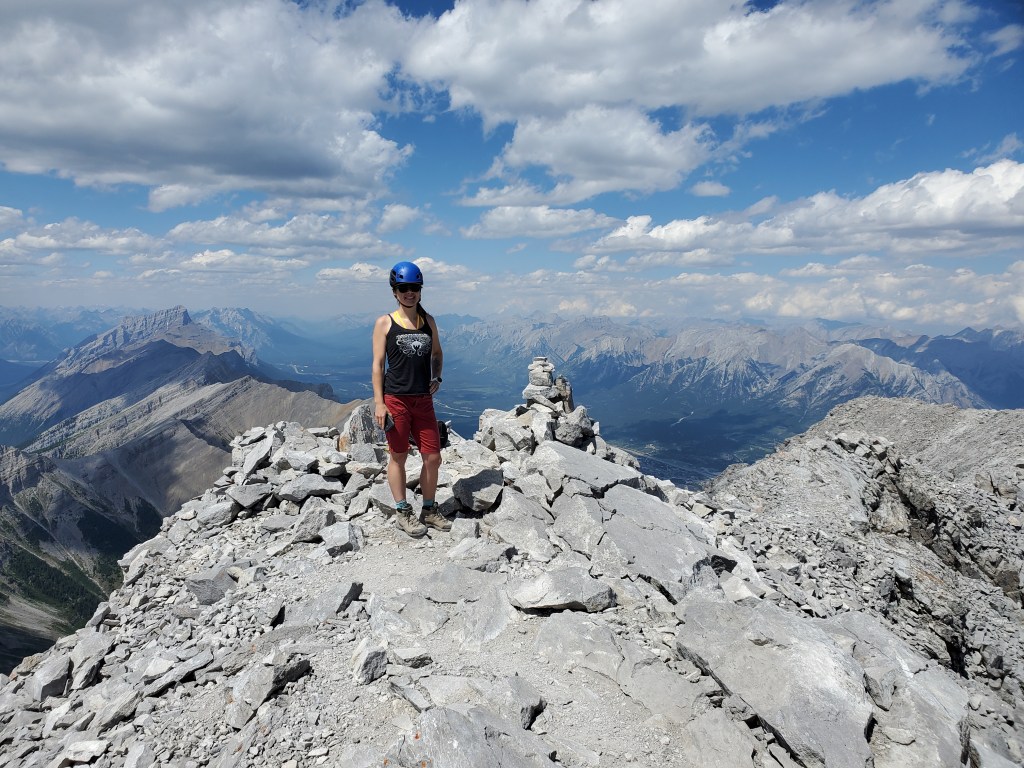
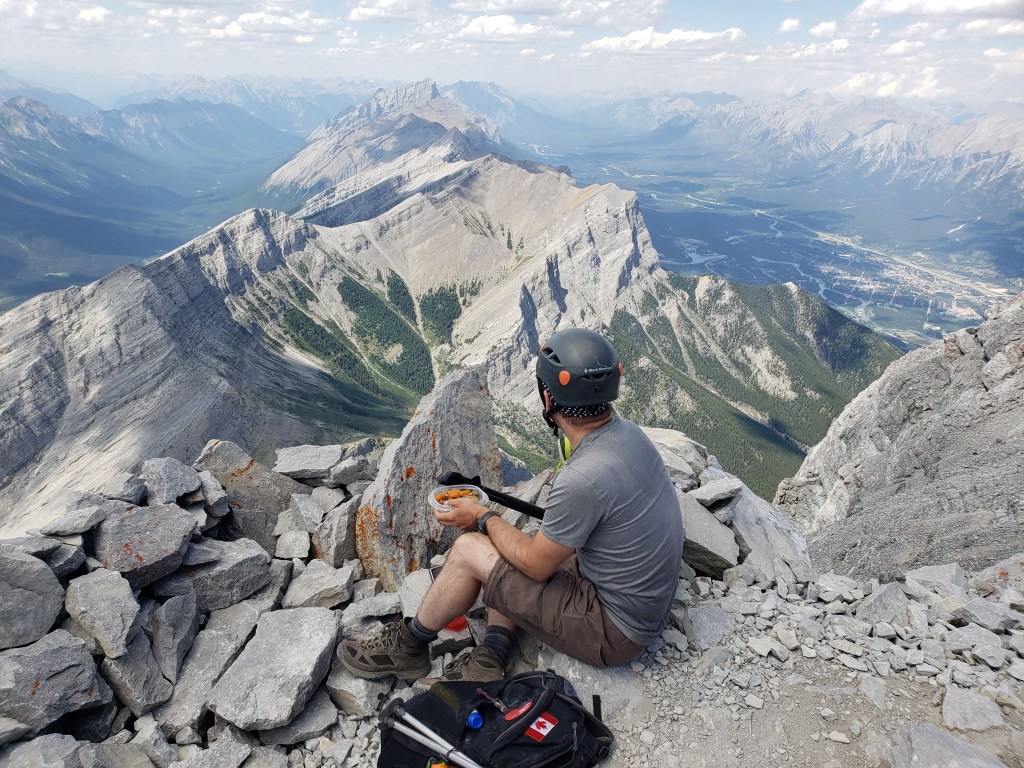
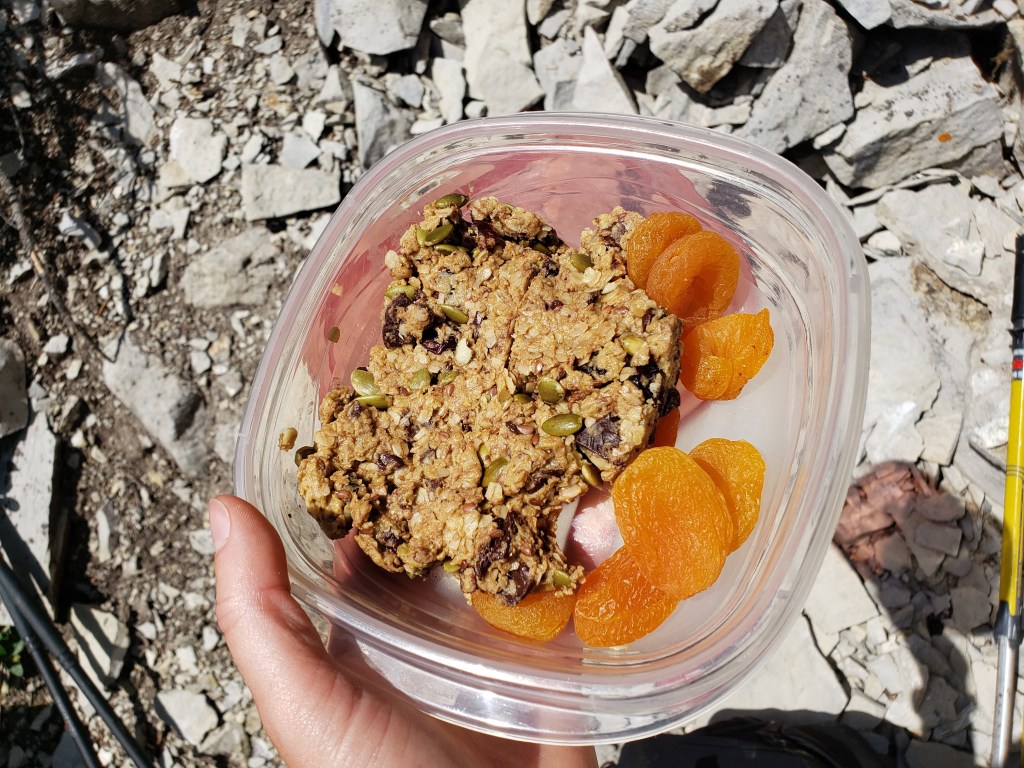
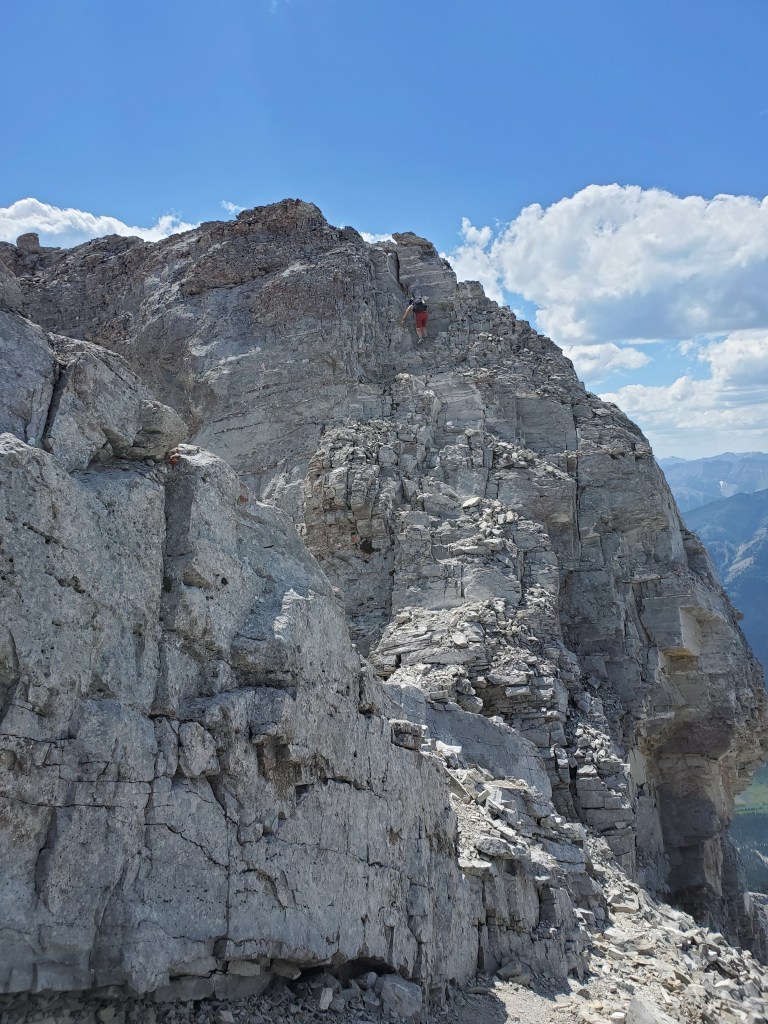
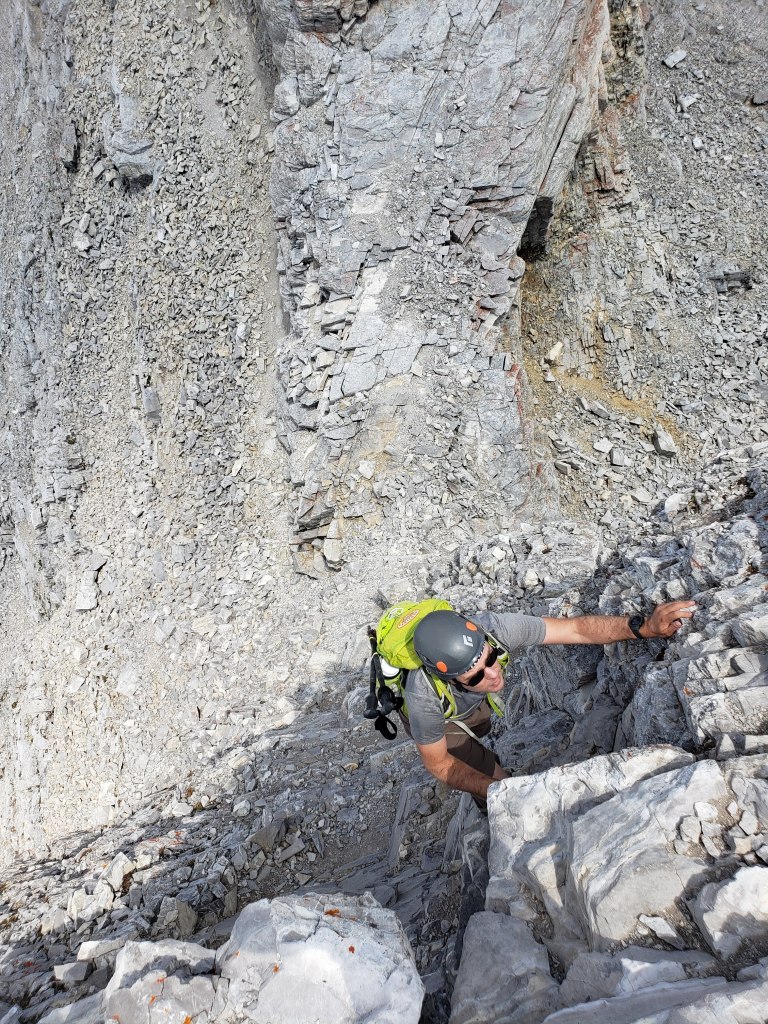
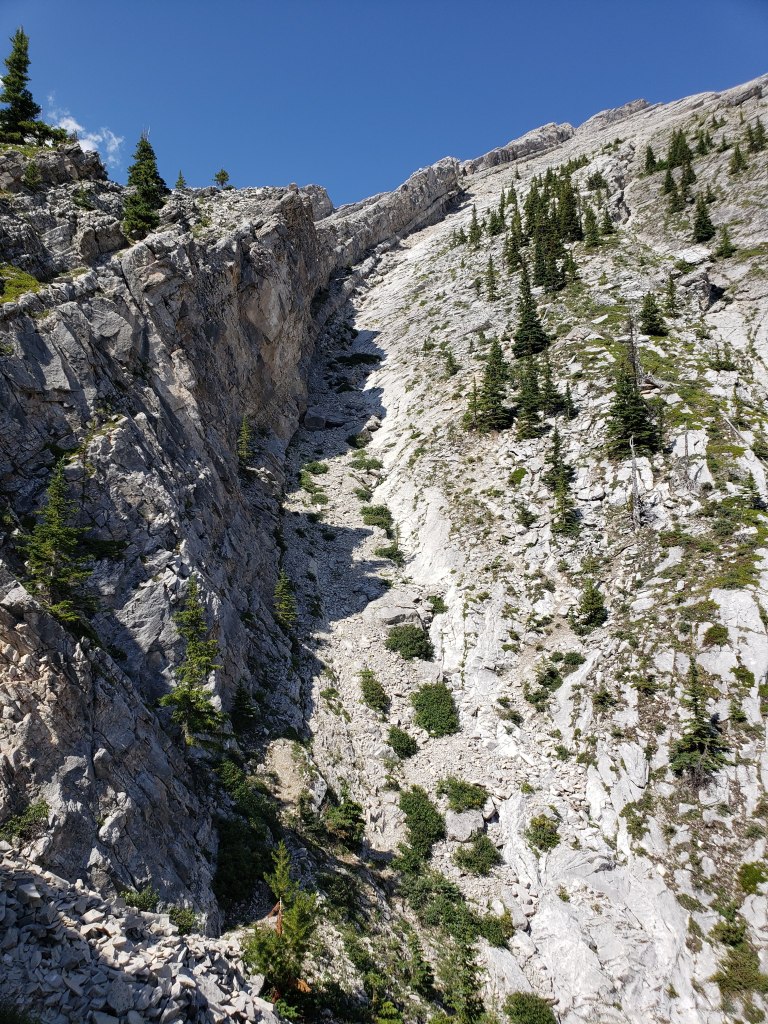
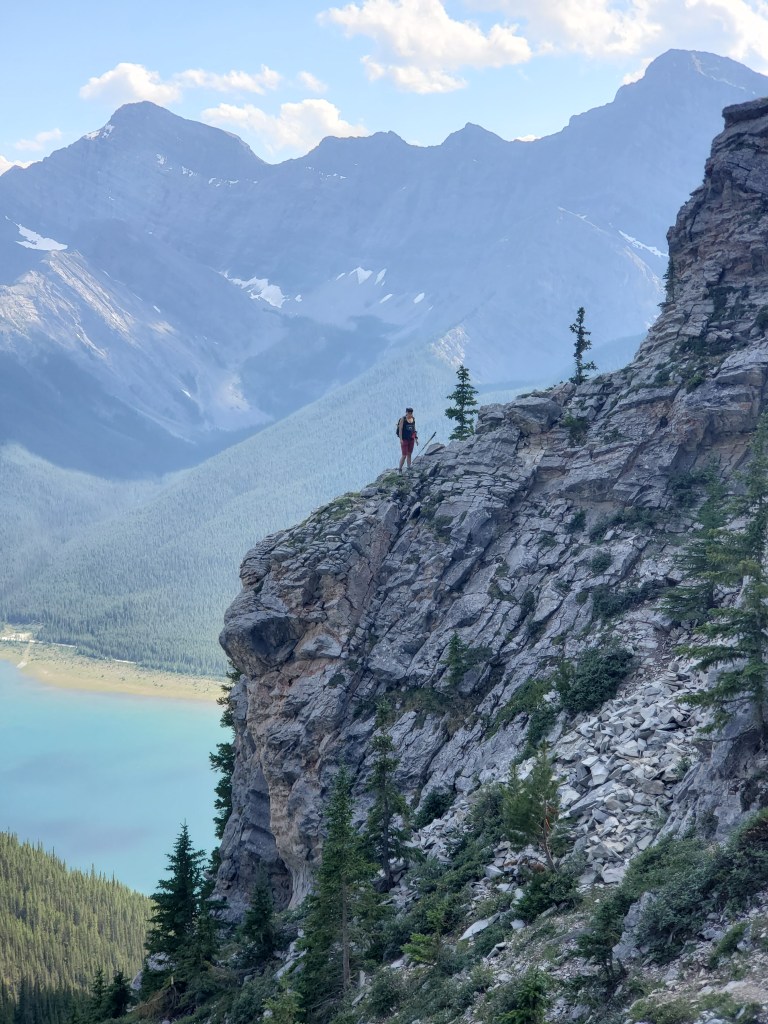
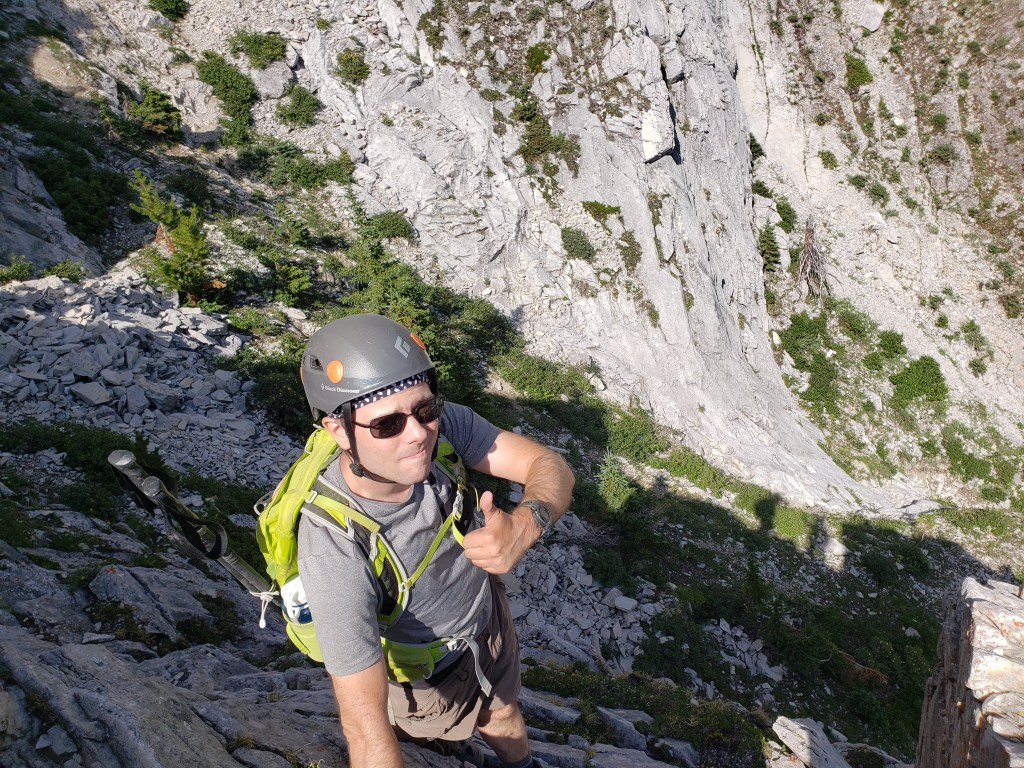
The large parking lot was easy to spot from the gravel highway running along Spray Lakes Reservoir, and already held many vehicles. A well-trodden trail leads from the parking lot. Looking at the major gully in the center, the top is framed by a pinnacle at the left and a cliff at the right. Despite appearances, both features will be easily bypassed around the back. The ascent route is further left in this photo, along the left side of the smaller gully.The trail winds through the trees, rising above Spray Lakes.The elevation measured by my watch can be hilariously inaccurate, depending on the day. With this in mind, I started scouting down around the cliff edge to our right from about 2000 m until I found a line that would go. The line was where Kane said, around the 2200 m mark. According to Kane it is possible to stay high on the ridge, but this traverse down to the right leads to an easier path that trades an airy ridge for pebbly slab.Once past the traverse, the way up is a “choose your own adventure” on slab. I wasn’t too keen on the amount of slab with dustings of loose gravel we had to cross and tried to avoid as much of it as I could – this is probably my least favourite scrambling terrain. Following closely on the cliff edge with its handholds can help through one steeper, looser section. Our line was never beyond moderate scrambling, but this type of terrain can be frustrating and slow-going.Looking back, the alternate route runs along the ridge above us. There were several people on both routes.Nearing the top of the slab. Here Kane describes that the “two routes join before reaching a 2m-high slabby step near the top. This step can be surmounted to the left (airy), or you can tiptoe across slab and ascend some 8-10 m further right.” I didn’t hesitate to engage slug-form and ooze across the slab. Slab is my jam!A well-worn trail leads to the crux. This downclimb was easier than it looked from above, but is quite exposed. For this reason, I would put this at the harder end of moderate scrambling. The downclimb has good holds and stable stemming positions (wide hands and feet, braced against opposite walls).Dan follows behind me on the downclimb. Once through the steeper top section, the lower half gets easier and more stair-like.Recall the pinnacles from the first photo? Here’s one of them up close. An easy trail bypasses behind the pinnacles along the summit ridge.I make my way up the summit ridge, continuing around the back (west) of the next pinnacle. Approaching the summit, with views of Spray Lakes framed by Mount Lougheed (left) and Goat Mountain (right).The summit offers spectacular views over the Bow Valley to the northwest.Looking west to Ship’s Prow (center) and Grassi Knob (right). Canmore is nestled in the valley below.I’m not usually much of a foodie, but homemade snack bars just taste so good while hiking. If you’re looking for a change, try out this Peanut Butter Protein Bar recipe from Wellplated. I like to also add dried cranberries and pumpkin seeds if I have them on hand.We returned the way we came, back up the crux. This can be a bit of a bottle-neck on a busy day since it only accommodates one scrambler at a time.Dan follows up the crux, foreshortening emphasizing the scale of the fall hazard here. Note the steep slope to the left where snow tends to linger in early season, which would elevate the hazard considerably (Kane recommends avoiding this objective entirely if snow is present).There are lots of huge holds, just like climbing at the gym.We returned back down the slab section. This photo is looking back up it. The alternate route above the ridge is along the left side.We spotted our traverse back to the main trail and scrambled back up. In this photo I am standing at the top edge, having completed the short traverse from right to left.It looks airy but isn’t so bad, right Dan?
On the way back down we just about got carried away scree-skiing and went past a turn off where the trail returns into the trees. I looked at my GPS watch to note our elevation and spotted that we’d strayed slightly off route. We back-tracked a dozen or so meters and met up with the trail again. It would be easy to continue much further down the wrong way if rushing through the descent. We made it back to our vehicle in 6 1/2 hrs by the same trail we’d ascended.
Big Sister is an iconic, must-do peak. However, for friends that have only tackled easy scrambles so far, I would probably suggest trying some other moderate scrambles before getting to this one. There is a range of difficulties within the easy, moderate, and difficult scramble ratings – the hardest end of moderate is virtually equivalent to the easiest end of difficult. For comparison, I would put this one at about the same difficulty as Mount Lady MacDonald (Kane’s easiest difficult scramble, in my opinion).
Appendix
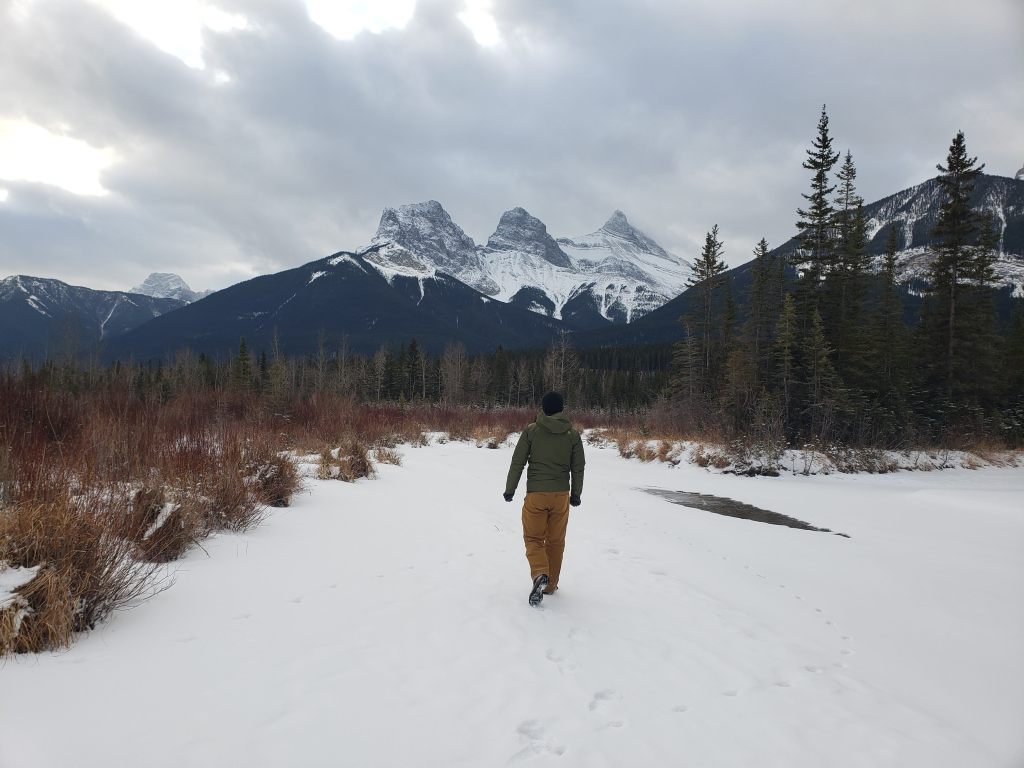
The Three Sisters, seen from Three Sisters Viewpoint in Dec 2019. The mountains are said to have been named for their resemblance to three nuns. From left-to-right they are Little Sister (Hope), Middle Sister (Charity), and Big Sister (Faith). Supposedly the mountains best resemble three nuns when snow covered.


 Peak Bliss